When Walking with Dinosaurs: The 3D Movie stomped into theaters in 2013, it promised a grand, immersive journey back to the Late Cretaceous period. For many, this cinematic adaptation of the beloved 1999 BBC series was poised to deliver the definitive dinosaur experience. Yet, as our "Walking with Dinosaurs" movie review and plot analysis will uncover, the film ultimately became a fascinating case study in how critical production choices—specifically the decision to give the majestic creatures human voices—can overshadow even the most breathtaking visuals. It's a tale of two films, one a visual marvel, the other a narrative misstep, battling for dominance on screen.
At a Glance: What You Need to Know About "Walking with Dinosaurs"
- Release: 2013, directed by Neil Nightingale and Barry Cook.
- Origin: Inspired by the hugely successful BBC "Walking with Dinosaurs" TV series.
- Core Story: Follows Patchi, a young Pachyrhinosaurus, on a perilous migration journey, facing predators and leadership challenges.
- Key Criticism: The choice to add human voiceovers and dialogue for the dinosaurs, widely seen as unnecessary and detracting from the potential for a more documentary-style, awe-inspiring experience.
- Key Praise: Exceptional CGI, scientifically accurate dinosaur designs, and stunning real-world landscapes (Alaska, New Zealand). Often recommended to be watched "with the sound off."
- Target Audience: Primarily children and families, offering educational facts alongside its adventure narrative.
- Ratings: IMDb 5.2/10, Rotten Tomatoes 22%.
- Box Office: Budget of $80 million, worldwide gross of $126.5 million.
The Foundation: A Legacy of Giants and Groundbreaking Television
Before we delve into the cinematic adaptation, it’s crucial to remember the monumental shadow cast by its predecessor: the 1999 BBC television series. That original "Walking with Dinosaurs" was a groundbreaking phenomenon, using revolutionary CGI (for its time) and a deep scientific narrative, voiced by the iconic Kenneth Branagh, to present dinosaurs as real animals in a real world. It was a silent, grand spectacle, allowing the magnificent creatures and their environment to tell their own story, punctuated by expert narration.
The 2013 film, produced by 20th Century Fox in partnership with BBC Earth, arrived with the weight of these expectations. With a generous $80 million budget, the promise was an even more immersive, big-screen version of that beloved formula, leveraging a decade and a half of technological advancement. However, the path it took diverged sharply from its roots, leading to a film that was both visually stunning and narratively contentious.
Plotting the Prehistoric Path: Patchi's Journey Through the Late Cretaceous
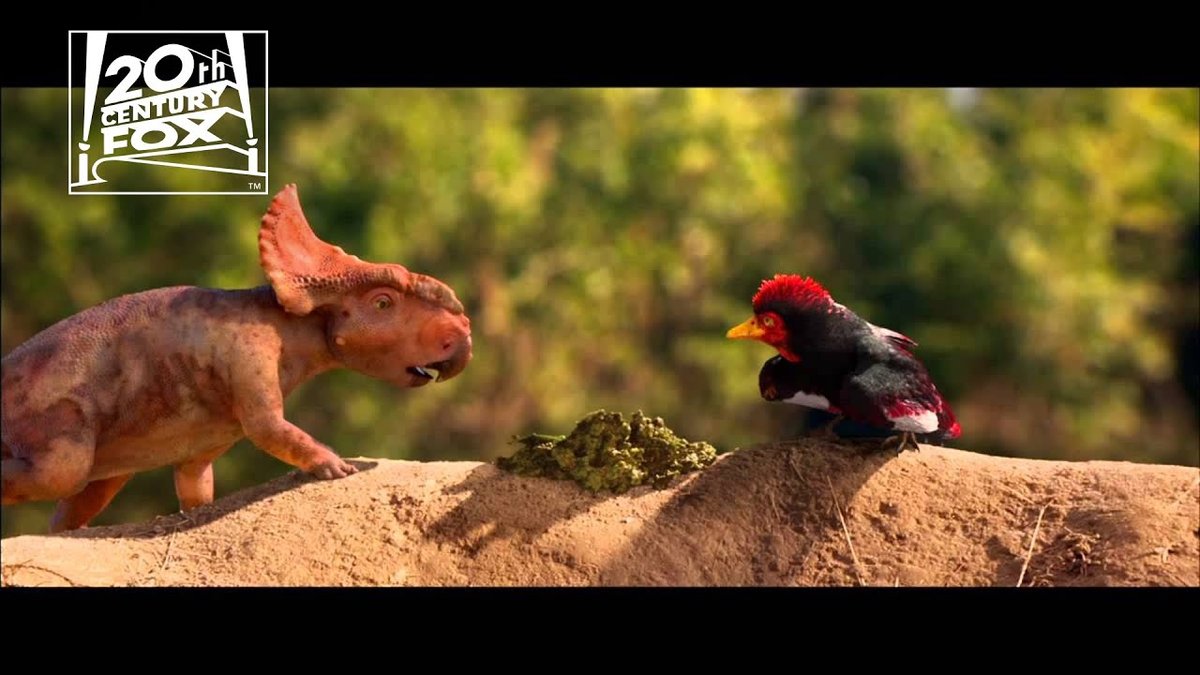
The movie's plot, at its heart, is a classic coming-of-age story set against a backdrop of prehistoric peril. We begin in the modern day, a somewhat jarring framing device featuring paleontologist Zack and his niece Jade and nephew Ricky on an Alaskan fossil dig. Ricky, initially disinterested, is transported back 70 million years through the tale spun by an Alexornis bird named Alex (voiced by John Leguizamo). This whimsical bird, who acts as narrator and occasional comic relief, sets the stage for our main protagonist.
Our hero is Patchi (voiced by Justin Long), a young, undersized Pachyrhinosaurus. He's the runt of the litter, perpetually in the shadow of his older, stronger brother, Scowler (Skyler Stone). Their herd, led by their wise father, Bulldust, embarks on a treacherous annual migration south for winter, a journey fraught with danger. Along the way, Patchi develops a crush on Juniper (Tiya Sircar), a female Pachyrhinosaurus who becomes a recurring focus of his affections and aspirations.
The narrative thrust comes from a series of classic cinematic challenges:
- Natural Disasters: A devastating forest fire separates Patchi and his family, forcing them to learn resilience.
- Predatory Threats: The ever-present danger of Gorgosaurus, the film’s primary antagonist, looms large. These formidable carnivores cull the weak and challenge the strong.
- Herd Dynamics and Leadership: When Bulldust sacrifices himself to protect the herd, Scowler assumes leadership, often with a heavy hoof and little empathy for his smaller brother. Patchi and Alex become separated from the main herd, learning vital survival skills and fostering Patchi's growth.
Patchi's ultimate journey involves not just survival but also self-discovery and the proving of his worth. He eventually reunites with the herd, challenges Scowler's often-tyrannical leadership, and, in a climactic showdown, defeats a Gorgosaurus, earning both the respect of his peers and Juniper’s affection. He steps into his rightful place as the new herd leader, embodying courage and compassion. The film wraps up with Ricky, back in the present, finding newfound appreciation for dinosaurs and joining his uncle in paleontological work, a neat but somewhat clunky tie-in.
The Double-Edged Sword: Visuals Versus Voices
Here lies the crux of the "Walking with Dinosaurs" film: its incredible visual achievements are constantly at odds with its polarizing narrative choices.
The Visual Majesty: A Feast for the Eyes
Without question, the film is a technical triumph in the realm of CGI. The $80 million budget was poured into creating some of the most realistic and beautifully animated dinosaurs ever seen on screen. Each scale, feather, and wrinkle is rendered with astounding detail. The creatures move with an authentic weight and fluidity, behaving in ways that reflect current paleontological understanding. From the lumbering Pachyrhinosaurus to the menacing Gorgosaurus, the dinosaurs feel truly alive.
What elevates the visuals even further are the breathtaking real-world backdrops. Filmed against the sweeping, untamed landscapes of Alaska and New Zealand, the CGI dinosaurs seamlessly integrate into their environments. You witness vast migrations across snow-dusted mountains, navigate dense, prehistoric forests, and feel the heat of a raging forest fire. These panoramic shots are majestic, evoking a true sense of scale and wonder. Reviewers consistently praised these aspects, often suggesting the film is "best appreciated with the sound off" to fully immerse oneself in the visual splendor. It's a testament to the animators and cinematographers that such a distinct visual identity was created for this Walking With Dinosaurs animated film.
The film also makes an effort to introduce a diverse array of lesser-known dinosaur species, broadening the audience's understanding beyond the usual T-Rex and Triceratops. This commitment to showcasing a wider paleontological scope, coupled with scientifically accurate designs and behaviors, adds an educational layer that harkens back to the BBC series.
The Narrative Stumble: When Dinosaurs Started Talking
The fatal flaw, in the eyes of many critics and fans of the original series, was the decision to give the dinosaurs names and, more significantly, human voices. This "Americanized" approach was a stark departure from the silent, narrated documentary style that made the BBC series so impactful. Instead of an omniscient narrator guiding us through a natural world, we get talking animals cracking jokes, expressing human emotions, and delivering often "hideous dialogue."
Studio executives reportedly made the call to add voiceovers post-animation, aiming for a more "kid-friendly" experience. This led to several issues:
- Awkward Lip-Syncing: The animation wasn't originally designed for talking dinosaurs, resulting in an unnatural and distracting lip-syncing effect that pulled viewers out of the immersion.
- Undermining Realism: The fundamental charm of the original series lay in presenting dinosaurs as magnificent, alien creatures. Giving them human voices anthropomorphized them to a degree that stripped away their inherent wonder and mystique, turning them into conventional cartoon characters.
- Predictable Plot: The dialogue-driven, character-centric approach forced a more conventional, often predictable storyline. Patchi's journey became a standard "runt makes good" tale, sacrificing the raw, brutal authenticity of survival in the Late Cretaceous for familiar tropes.
- Lost Potential: Many felt the film squandered its potential to be a truly immersive, educational, and awe-inspiring documentary-style experience. The narration by Alexornis, while intended to be charming, often felt intrusive and undermined the visual storytelling.
The critical reception, reflected in its dismal 22% Rotten Tomatoes score and an IMDb rating of 5.2/10, largely mirrored this sentiment. Reviewers lamented the wasted opportunity, often highlighting the disconnect between the stunning visuals and the weak, cloying dialogue.
Unpacking the Plot: Themes, Character Arcs, and Creative Liberties
Beyond the voiceover debate, the plot of "Walking with Dinosaurs" offers a look at some common narrative themes, albeit through a prehistoric lens.
Themes Explored:
- Survival of the Fittest: While anthropomorphized, the core struggle for survival against predators, natural disasters, and the harsh environment is ever-present.
- Brotherly Rivalry and Leadership: The dynamic between Patchi and Scowler is a central conflict, exploring themes of jealousy, ambition, and what truly makes a good leader. Bulldust's initial leadership and Scowler's flawed assumption of power highlight different leadership styles.
- Coming-of-Age and Self-Discovery: Patchi's journey from an insecure runt to a confident leader is the archetypal hero's arc, demonstrating growth through adversity.
- Love and Connection: The budding romance between Patchi and Juniper provides a softer, more emotional anchor to the story, contrasting with the survival struggles.
Character Arcs:
- Patchi: Begins as an underdog, physically smaller and less confident than his brother. Through separation, hardship, and ultimately, bravery, he matures into a capable and compassionate leader. His arc is the most developed.
- Scowler: Starts as the dominant, often arrogant older brother. While he initially proves to be a harsh leader, his arc suggests a struggle with the weight of responsibility and perhaps a grudging respect for Patchi by the end.
- Alex: The wise-cracking Alexornis serves primarily as a narrative device and mentor figure. His arc is less about personal growth and more about guiding Patchi and providing context.
- Juniper: While important to Patchi's motivation, Juniper's character is less developed, often serving as a prize or object of affection rather than an independent force.
Creative Liberties vs. Scientific Accuracy:
The film walked a tightrope, attempting to blend scientific accuracy with a fictionalized narrative. Dinosaur designs and general behaviors (e.g., migration patterns, predatory tactics) were largely accurate, drawing on the BBC's reputation for scientific rigor. The introduction of specific dinosaur facts, often presented through Alex's narration, furthered this educational aim.
However, the narrative took significant creative liberties, most notably with the talking dinosaurs. While the core scientific facts about the creatures themselves were respected, the human-like storytelling and emotional arcs were entirely fabricated for dramatic effect. This balance between "edutainment" and pure entertainment often felt uneven, satisfying neither the purists who sought a true documentary nor the casual viewers who might have preferred a more straightforward adventure flick without the scientific interruptions.
Common Questions and Misconceptions
"Is 'Walking with Dinosaurs' accurate?"
The film features scientifically accurate dinosaur designs, behaviors, and anatomical details, and highlights real locations during the Late Cretaceous period. However, the narrative itself—dinosaurs talking, having human-like motivations, and following a conventional story arc—is entirely fictionalized for entertainment purposes. Think of it as a fictional story starring scientifically accurate puppets.
"Is the movie suitable for young children?"
Generally, yes, it's aimed at families and children. However, it does contain scenes of predatory dinosaurs hunting, brief but intense natural disasters like forest fires, and moments of peril for the main characters. These scenes, while not overly graphic, might be intense or frightening for very young or sensitive viewers. Parental discretion is advised.
"Why did they add voices when the original series didn't have them?"
Studio executives reportedly believed that adding human voices and dialogue would make the film more "kid-friendly" and appeal to a broader American audience, diverging from the more documentary-style approach of the original BBC series. This decision was controversial and widely criticized by those who felt it undermined the film's potential.
"Is it a sequel to the BBC series?"
It is an adaptation and reimagining, not a direct narrative sequel. While it draws inspiration from the original series' premise of showcasing dinosaurs in their natural habitats, the 2013 film tells a new, distinct story with original characters and a significantly different narrative style.
The Verdict: A Visual Spectacle Hampered by Its Own Voice
"Walking with Dinosaurs: The 3D Movie" stands as a poignant example of a film with immense potential that ultimately struggled to find its identity. It's a technical marvel, a showcase of incredible CGI married to stunning real-world cinematography. The efforts to bring lesser-known dinosaurs to life with scientific accuracy were commendable, offering an educational glimpse into a long-lost world.
Yet, its narrative decisions, particularly the addition of human voices and often clunky dialogue, proved to be its Achilles' heel. This choice created a chasm between its breathtaking visuals and its predictable, sometimes irritating, storytelling. It stripped away much of the wonder and majesty that defined its BBC predecessor, leaving many viewers wishing for a silent version, allowing the sheer visual power of the dinosaurs and their world to speak for itself.
For those who prioritize visual spectacle and can either tune out the dialogue or view it as harmless background noise, the film offers an impressive journey back to the Late Cretaceous. It's a film perhaps best experienced with a sense of visual appreciation, understanding that while its dinosaurs looked the part, their voices often told a different, less impactful story.
Ultimately, "Walking with Dinosaurs" is a film that reminds us that sometimes, silence truly is golden, especially when dealing with creatures as magnificent and awe-inspiring as the dinosaurs.